Sunday, April 30, 2006

Review: Wing Nuts: Screwy Haiku


Paul B. Janeczko and J. Patrick Lewis have teamed up to write an incredibly fun picture book filled with humorous senryu (three lines with fewer than seventeen syllables, topic usually light).

The senryu in Wing Nuts: Screwy Haiku address a variety of topics, from animals to musical instruments and grandparents. Here's an example of one of Janeczko and Lewis' senryu:

Noah Webster had
no choice except to put
the cart before the horse

Many of the senryu play wonderful word games, like this one about a crow:

Solitary crow
calls its cousin in distant pine
with its cawing card

Tricia Tusa's illustrations to Wing Nuts: Screwy Haiku are zany, chaotic, and just plain fun. She has as much fun with the words as the poets do. (The crow, of the "Solitary Crow" senryu, holds a white card with the last two words written on it, for example.)

Review: Anatopsis


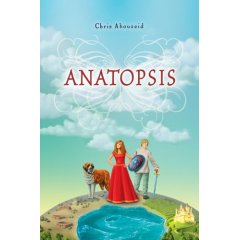
Chris Abouzeid's Anatopsis is one of the most original fantasy novels I've read in a long time. Moreover, Anatopsis is a beautifully written novel, and one with multiple levels of meaning.

Anatopsis Solomon, or Ana, is an immortal princess. Her mother rules her home, her family, and Amalgamated Witchcraft Corporation with an iron hand. When Ana nears her thirteenth birthday, her mother has more than a few surprises in store. First, Ana is to begin preparing for her Bacchanalian exams and a new teacher will arrive shortly. And, she learns she will have a new classmate, Prince Barnaby Georges, the son of the rival (and only) castle.

Ana does have comfort in all this upheaval, however. She has a close friend, a mortal girl named Clarissa, who is supposed to look after Ana, but mostly reads the books in the castle library. Clarissa, as a mortal, can not learn magic and, because she is highly intelligent, resents the immortals. Ana also has her father, the kindly Sir Christopher, a knight-errant, who travels on frequent rescue missions. Ana thinks she'll ride this storm out like previous ones, but when her teacher arrives, it becomes clear she was wrong.

Mr. Pound causes an icy chill when he enters a room, his words command Ana's ears to listen, and Clarissa can find no mention of his name in magical books and records. And, Ana's father has been sent away on a knight-errant job. Soon the kids (and Barnaby's dog, Uno) are off on a mission--to find out who Mr. Pound is and what he's up to. Their quest leads them to the dungeons where hollowed-out bodies and book smugglers are found.

I'm not going to tell you what happens, but I will tell you about some of the more interesting aspects of Anatopsis. First of all, every spell the immortals cast causes a side-effect, a metallic slag called athen. The mortals live in a ghetto where nothing grows, including animals, because of the environmental impact of the athen. Second, Ana's relationship with Clarissa, her mortal friend, is a complicated one. Clarissa, while she loves Ana, has loyalties to her community and believes what the immortals have done is unjust and cruel.

Anatopsis deals with class, environmental disaster, the nature of family and friendships. I highly recommend it to readers ages nine and up and it goes on my Favorites of 2006.

**************
Check out Michele's (of Scholar's Blog) review of Anatopsis at The Edge of the Forest. Michele will also interview Chris Abouzeid for the May edition of the Forest. Also, Jen Robinson recently reviewed Anatopsis at Jen Robinson's Book Page.

Saturday, April 29, 2006

A hot man objects.

Blogger is acting wonky, but I'd be remiss if I didn't direct you to Mo Willems' response to A Fuse#8 Productions' Hot Men of Children's Literature series. It will be the best thing you read all day. Enjoy!

Carl Hiaasen interview

Margaret Wappler interviews Carl Hiaasen on the occasion of the release of Hoot (film version) for the Los Angeles Times. (Thank god they spelled Hiaasen correctly. It's like Newbery, always misspelled in the press.)

Wappler asks Hiaasen about California vs. Florida, writing for children, the movie Hoot, and future work (for adults). Here's one exchange:

  • MW: "Was it a stretch to write young adult fiction after years of writing adult novels filled with pungent language and gruesome deaths? "
  • CH: "Don't forget acrobatic sex and random dismemberment. But no, it wasn't hard. Hoot was a much more personal book written for the kids in my family: my nieces, my nephew and my stepson. They weren't old enough to read my adult novels, and I thought, 'Wouldn't it be great to write a book that I could give to them without getting them taken away to the Division of Family Services?' But I also wanted it to maintain the irreverent tone that's in the other novels. Kids dig the sarcasm and irreverence.

Isn't that the truth?

Read to the Kids


Jacqueline Wilson, the Children's Laureate in the U.K., recommends parents read to their children fifteen minutes a day until they are twelve years old. Sarah Cassidy covers the initiative for the Independent. Cassidy writes,
  • "Ms Wilson urged parents not to abandon story time. 'I want everyone to carry on reading to their children when they can read alone,' she said. 'Just because a child can read alone doesn't mean they won't benefit from still having a regular storytime with their parents. I was surprised how many people read aloud to their children until they are five or six and then stop.'"

I think it depends on the child, personally. Indeed, Wilson says parents need to continue to read to children because they, "are still reading with their finger pointing under each word and are not ready to go on to really long books even though they are intellectually ready for them. " That may be true in some cases, but in others--many children I know, for example--the jump to advanced reading takes place within the course of a year.

In any case, what I really liked about the article were the celebrity favorite read-alouds at the end of the article. Sheila Hancock, whom I admit I had to google to find out she is a well-known British actress, recommends one of my all-time favorite books, Not Now, Bernard, by David McKee. And Imogen Stubbs (another actress) recommeds Horrid Henry's Underpants, by Francesca Simon, for some really good reasons (more examples of why these books should be published in the States!):

  • "We have a nine-year-old son, Jesse, who is dyslexic and, until recently, was no more connected to books than a mole to the sky. And then we read Horrid Henry's Underpants to him. And he loved it. He immediately latched on to the characters and found them very funny."

Friday, April 28, 2006

So Many Awards...

...today! Susan at Chicken Spaghetti has the full rundown, but I wanted to pay particular attention to the Jane Addams Children's Books Awards, presented annually by the Jane Addams Peace Association. The 2006 winners are:
One of the winners, Let Me Play: The Story of Title IX, the Law that Changed the Future of Girls in America, was recently reviewed by Liz Burns at The Edge of the Forest.

Poetry Friday: Wild About Books


One of my favorite picture books of the past few years is Judy Sierra's Wild about Books (illustrated by Marc Brown).

Wild about Books celebrates children's literature by introducing it to the animals at the zoo. As the text begins, "It started the summer of 2002,/When the Springfield librarian, Molly McGrew,/By mistake drove her bookmobile into the zoo." From that moment forward the animals go wild for children's books. My favorite stanza concerns the proper care of books:

"Gently, Molly taught lessons in treating books right,
For the boa constrictor sqeezed Crictor too tight,
Baby bunnies mucked up Goodnight Moon with their paws,
Giant termites devoured The Wizard of Oz,
And bears' love of books was completely outrageous--
They licked all the pictures right off the pages."

The pages that always make me laugh, however, concern the bugs in the insect zoo "scribbling haiku." While the bugs write, a scorpion provides a "stinging review." The most hilarious haiku is the work of the Giant Hissing Cockroach:

Hiss hiss hiss hiss hiss--
Hiss hiss hiss hiss hiss hiss hiss--
Hiss hiss hiss hiss hiss.

To which the scorpion replies "redundant."

Updated! Other Poetry Friday participants this week: other Poetry Friday offerings at Farm School, Book Buds, The Simple and the Ordinary, Chicken Spaghetti, Jen Robinson, Slayground, and Scholar's Blog.

Thursday, April 27, 2006

Roots in Writing Award

A big congratulations to Jane Yolen for her receipt of the Roots in Writing Award!

The Roots in Writing award is given by the Science Fiction and Fantasy Female Writers. Previous winners have included Betty Ballantine, Madeleine L'Engle, Anne McCaffrey, Ursula K. Le Guin, Kate Wilhelm, Joanna Russ, and the late Andre Norton.

I can't find a website for the Science Fiction and Fantasy Female Writers, but here's a press release from the Science Fiction and Fantasy Writers of America.

Thanks to a Child_Lit member for the news.
Roger Holland reviews Kids' DVDs for PopMatters. I really like the reviews at PopMatters. They're written (well) in a snarky, but not too snarky, style and are not superficial reviews like those you'd see in Newsweek or People.

Let me put this way, the Boohbahs and the Teletubbies don't fare well. Neither do the products "aimed directly at tween hearts and minds," like Zoey 101.

There are some good recommendations, however, including Caillou The Everyday Hero (Holland notes, correctly, that the puppet sequences are not as good as the rest of show), A Boy Named Charlie Brown, and something I've never heard of--Avatar The Last Airbender --Book 1 Water, Volume 2.

Have any of you watched Avatar? Is it any good?

Wednesday, April 26, 2006

King Dork


Also, thanks to Book*&^%, a link to the Entertainment Weekly review of Frank Portman's King Dork.

I haven't reviewed King Dork because there have been so many good reviews (here's a great one at Bookshelves of Doom), but I just wanted to mention that this book rocks (and I'm not even a huge YA fan). I especially loved the "Catcher Cult," the legions of adult fans pressing The Catcher in the Rye on their students. Teachers, parents, acquaintances all telling the youngsters that The Catcher "changed their lives." I'm with the narrator, Tom Henderson, on this one. I've never thought The Catcher in the Rye is all that.

In any case, read King Dork. It's funny, dark, true-to-high-school (especially if you were a geek), and ultimately very touching. Oh, and the band names are hilarious.

Teen Reading Lists

Lynn Thompson writes about high school reading lists for The Seattle Times. In this fascinating article, Thompson interviews teachers and school officials in Seattle about their attempts to liven up required and optional reading lists. The upshot is this:
  • "Largely in response to their more ethnically diverse student bodies, high schools in the area are broadening their literature selections to include more contemporary writers, more women and more minorities.
    Students say the books engage them more immediately than the classics yet still raise timeless questions about existence and meaning."

One teacher interviewed that The Grapes of Wrath is just not working any more in the classroom, and another has dropped Julius Caesar. Also, Dante's Inferno causes too much controversy to be on the required reading list and is instead relegated to the optional list.

I think broadening the reading list, giving more options, is a good idea in the schools. You don't want to be pulling teeth in a discussion of The Grapes of Wrath.

A very interesting article. Thanks to Book*&^% for the link.

Tuesday, April 25, 2006

Review: Celebrate! Connections Among Cultures


Celebrate! Connections Among Cultures, written and photography by Jan Reynolds, is a gorgeous "picture" book for older children (ages 4-12, I'd say).

Celebrate! takes a look at celebrations in eight different cultural groups, including: 1) Tibetans and Sherpas in the Himalaya; 2) the Tuareg, nomads in the Sahara; 3) the Aborigines in Australia; 4) the Sami of "the northern tip of Europe"; 5) the Yanomami of the Amazon basin; 6) the Inuit of the north of North America; 7) the Balinese of Indonesia; 8) people of the United States. The end result, when examining Reynolds' beautiful photographs, celebrates the commonalities of the human experience, while appreciating the colorful differences in each cultural tradition.

Reynolds presents many different aspects of traditional celebrations including gathering together, eating and drinking, decorating ourselves, playing music, dancing, and making fires. U.S. celebrations (for making fire, birthday candles are shown as an example) are presented as one of many ways to celebrate as a community group.

Celebration! Connections Among Cultures would make an excellent read-aloud for children ages four-eight and a wonderful resource for older children just beginning to explore the world on their own. As I've mentioned, Reynolds' photography is stunning and colorful, perfect for illustrating celebratory events (a photo of a Balinese cake is my personal favorite in the book). The text is straightforward and explanatory, emphasizing commonalities over differences.

A beautiful book published by Lee & Low.

Monday, April 24, 2006

What a Day...

What a day dad had.

Okay, so I'm not a dad, but I sure feel like the dad in Hop on Pop today. It's been one busy day.
So, I'm directing you elsewhere!

I'll see you all tomorrow when the smoke clears. Cheers!

Sunday, April 23, 2006

Review: Cat Kin


This is a very early review of Nick Green's Cat Kin.

Originally a print-on-demand title from Lulu, Cat Kin will be published by Faber & Faber in the U.K. in the next year of so. At present, it's a rare commodity, but one certainly worth mentioning (and repeating when it has its second life with Faber & Faber).

Okay, so on to the review. Ben is in trouble. Some horrible men are pressuring his mom to sell her flat in a nearly abandoned area of London and they're resorting to some nasty and dangerous techniques. He also gets into a spot of trouble when he doesn't throw a pinball tournament as planned. To appease his troubled mother Ben agrees to join a Tae Kwon Do class at the local sports center.

At the same time, Tiffany wants to take anything but ballet on Thursday nights when she is supposed to be out of the house (date night). Tiffany hates ballet and is decidedly ungainly in the practice of dance. She sees an ad for a new class at the center--"Cat Kin: Explore your feline spirit, Cat lovers and the curious welcome." Tiffany decides to take this class instead. It's not as if her parents would notice--they're too busy with her little brother who has been diagnosed with Muscular Dystrophy.

On the first Thursday of classes, Ben assumes Tiffany (in her sports clothing) is heading for the Tae Kwon Do class. When Mrs. Powell, the Cat Kin instructor, sweeps them away, he follows. What comes next is the first lesson in pashki, a study that "awakens the part of yourself that is like a cat."

What follows this intriguing and completely unique beginning is a fast-paced, smart mystery involving treetop chases, alternative medicines, secret laboratories, cat-napping, real estate fraud, and a conclusion to the mystery that caught me completely off-guard. The children of the Cat Kin class begin to move and act like cats in ways young readers will find amazing and inspirational.

Cat Kin is one of the most original middle-grade novels I've ever read. And it's suspenseful, intelligent, and just plain fun. Highly-recommended for kids ages 8-14.
***********************************************
While you're waiting for Cat Kin, check out Nick Green's website for more information. I'm off to hand Cat Kin to my daughter who has been pestering me for weeks for it.

Saturday, April 22, 2006

Weekend Reviews

Elizabeth Ward features baseball books in honor of spring and the baseball season in her "For Young Readers Column" (Washington Post). This year has seen a number of baseball titles and Ward takes a look at the most notable. They are:
  • Samurai Shortstop, by Alan Gratz. This one has been getting a lot of good reviews this year. I may even have to read it, even though it is about baseball. In any case, Ward writes, it's "a page-turner that's as much about history as baseball."
  • Under the Baseball Moon, by John H. Ritter ("quirkier," "refreshing")
  • Two Hot Dogs with Everything, by Paul Haven ("a sweet, subtle yarn")

*******************************************

In the completely unrelated to children's literature department... a fascinating article on the deep structures of writing systems of the world.

Friday, April 21, 2006

Poetry Friday: Ted Hughes


I've been very excited for this poetry Friday, because I have in my hands a book I wanted very, very much--Ted Hughes' Collected Poems for Children, illustrated by Raymond Briggs. An enormous thanks to Michele of Scholar's Blog (my U.K. source, so to speak) for including this one in a trade.

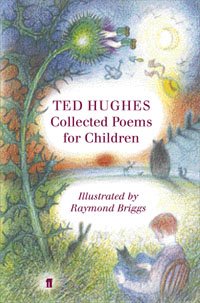
Ted Hughes' Collected Poems for Children is a gorgeous book. Published by Faber and Faber in 2005, the Collected Poems for Children is arranged by volume, "beginning with those for younger readers and progressing to ...more complex and sophisticated poems." The first volume, for example, is called "The Mermaid's Purse," and contains a variety of sea-related poetry for the very young. Raymond Briggs, an illustrator I've loved since Father Christmas, provides lovely pencil drawings throughout the text in the margins next to the poems.

Today, I'd like to share a poem intended for middle-grade readers, "Moon-Whales," first published in 1976.

Moon-Whales

The plough through the moon stuff
Just under the surface
Lifting the moon's skin
Like a muscle
But so slowly it seems like a lasting volcano
Leaving a hole blasted in the moon's skin

Sometimes they plunge deep
Under the moon's plains
Making their magnetic way
Through the moon's interior metals
Sending the astronaut's instruments scatty.

Their music is immense
Each note hundreds of years long
Each whole tune a moon-age

So they sing to each other unending songs
As unmoving they move their immovable masses

Their closed eyes estatic
*****************************************
Check out other Poetry Friday contributions: Becky at Farm School, A Fuse #8 Productions recommends a book of poetry for the youngsters, and Jen Robinson offers us Daffodills.

UPDATE! Little Willow contributes a funny Dickinson and Susan at Chicken Spaghetti points to a poetry-writing guide for kids.

Thursday, April 20, 2006

Hooray! The Telegraph has published its semi-annual "Books for Younger Readers." It has been such a crazy week, I missed it on Sunday. In any case, here's a brief summary.

Lorna Bradbury reviews "silly stories." These include,
  • Down the Back of the Chair, by Margaret Mahy ("terrific fun," due out in the States on June 12),
  • Amazing Mr Zooty!, by Emma Chichester Clark (a "feel-good story with jolly pictures," U.K. publication on May 24)
  • When a Zeeder Met a Xyder, by Malachy Doyle ("a lovely verse story, with a neat ending," U.K. publication)
  • The Opposite, by Tom MacRae ("a quirky story with distinctive slug-like illustrations," U.K. publication on April 26)

Jack Kerridge reviews Victorian novels for children and claims, "there are few things so pleasurable as settling down to a good Victorian novel and, happily, people are writing them for children, too. " He reviews three new novels for middle-grade readers, but, alas, none of them are currently released in the U.S.

Elena Seymenliyska reviews two recent historical novels--The Boy in the Striped Pajamas, by John Boyne (September 12 publication in the U.S.) and The Book of Everything, by Guus Kuijer.

Alastair Sooke considers recent fantasy titles, including:

  • Lionboy: the Truth, by Zizou Corder ("the final book in their winningly zany trilogy")
  • Evil Star, by Anthony Horowitz (a mixed review)
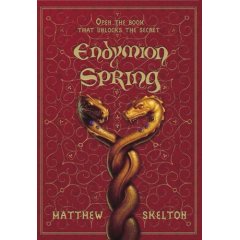
  • Endymion Spring, by Matthew Skelton (a "shadowy, serpentine mystery" with "all the richness you hanker for," U.S. publication on August 22)
  • A Darkling Plain, by Philip Reeve ("Science-fiction lovers will lap up the Blade Runner-esque blend of the futuristic and the medieval," U.K. publication only)

Dinah Hall recommends the "best books" to occupy child readers of all ages. It's a great anticipating-summer-already article. Stock up now.

The Six Things Meme

MotherReader has tagged me with a particularly difficult meme--Six Strange Things/Facts/Habits about me. Hmmm...there are so many...which to choose? I guess I'll go with some random ones:
  • 1) I am a sleepwalker, sleepeater, and so forth. But only in the first three hours of sleep.
  • 2) I don't believe in ghosts or any supernatural phenomena. That being said, I swear I heard something very strange in Book Soup in West Hollywood some fifteen years ago.
  • 3) A three-week bout of Chickenpox in college caused me to change my major from Classics to Slavic. I was never able to catch up in Latin 112 (or whatever the number was).
  • 4) I remember my childhood and graduate school much better than I remember university. I have no idea why.
  • 5) My favorite place in the world is the British Library in London (new one).
  • 6) The book I loved most in childhood was Arthur Ransome's Swallows and Amazons. Again, this is a mystery to me; in 39 years I've spent a grand total of one night outdoors and I never plan to camp again.

Whom do I tag? Anyone who wants to reveal six strange things about themselves!

Wednesday, April 19, 2006

All quiet on the bloggin' front?

When all's quiet on the blogging front, it must mean a new edition of The Edge of the Forest!

This month's issue features a number of new contributors and columns.

Please check it out and let us know what you think. If you're interested in contributing, do drop me a line.

Tuesday, April 18, 2006

Lois Lowry

Alyson Ward profiles writer Lois Lowry for the Star-Telegram on occasion of the publication of Gossamer.

In the article, Lowry repsonds to her critics, who have challenged her books around the country for having "disturbing themes."
  • "'I consider it very troubling,' she says. 'I guess it does say that I write to serious and provocative issues. But I'm somebody who cares a great deal about children and their sensitivities. I would never write anything in a million years that would be damaging to children.'"

Lowry also says something I agree with completely about reading fiction as a child: "'I think reading fiction is the way we rehearse our own lives and prepare ourselves for things we are going to encounter...Children should read about loss and pain and sorrow, she says, because kids are going to encounter scary and disturbing things at some point.'"

Isn't that the truth?

*********************************

I discovered today while writing this post that Lois Lowry has a blog. (Like most wordsmiths, Lowry does not like the word "blog")

Monday, April 17, 2006

X.J. Kennedy


Elizabeth Lund talks to poet, scholar, and editor, X.J. Kennedy, for the Christian Science Monitor.

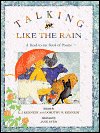
X.J. Kennedy is the editor (with his wife, Dorothy Kennedy) of my favorite anthology of verse for the youngsters, Talking Like the Rain. And, he has some very perceptive ideas about reading and writing verse. For example, he says, "I like poems where you don't really know whether to laugh or cry when you read them...I like what Auden said once, that poetry is the clear expression of mixed feelings."

I especially appreciate what Kennedy says about reading poetry with the youngsters:

  • "The attitude that poetry should not be analyzed is prevalent among many who consider themselves experts on children's literature. But I suspected that kids like to look closely at things and figure out what makes them go. Without talking a poem to death, why couldn't you look closely and see what some of its elements are, what's going on in the language? Do you have metaphors, colorful figures of speech, musical sound effects?"

I agree wholeheartedly. Kids like to talk about language, about words, about rhyme.

Sunday, April 16, 2006

Review: Clair-de-Lune


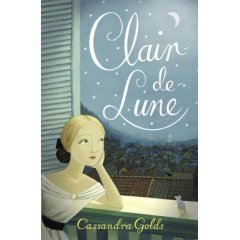
Clair-de-Lune, by Cassandra Golds, is a ballet story for the middle-grade reader. That being said, Clair-de-Lune is a completely different ballet story, one that includes a touch of fantasy and much on the perils of The Dance.

Clair-de-Lune is a student of The Dance. Her grandmother, with whom she lives in an unnamed city, in an unnamed time, was also a Great Dancer. Her mother, La Lune, died performing a beautiful dance and was considered the best dancer of her generation.

Clair-de-Lune studies The Dance at Monsieur Dupoint's Select Dancing Academy for the Children of Artistes who Aspire to Enter their Parent's Profession. She is considered the best dancer of her class, but is roundly disliked by her fellow students because she can not speak. They call her a snob.

One day, Clair-de-Lune meets a mouse, Bonaventure, who is concerned about her sadness. He takes her to a monastery on the sea to "talk" about her affliction with Brother Inchmahome. At the same time, Bonaventure founds his school of dance for mice. Through her conversations with Brother Inchmahome, observing Bonaventure's pure love of and dedication to The Dance, and hearing "something subversive in Church," Clair-de-Lune learns that there may be something more important than The Dance. Love. Clair-de-Lune vows to smile at people and when they smile back in surprise, Clair-de-Lune begins to heal.

There are a series of cataclysmic events towards the end of the novel that derail Clair-de-Lune's healing, but in the end she learns the truth about herself, her mother's tragic death, love, and The Dance. Clair-de-Lune is a beautiful novel and the fantasy elements work well without being overly sentimental or cute. Highly recommended to sensitive, perceptive middle-grade readers and one of my favorite books of 2006.

***********
As an aside, I loved the name of a Russian dancer in the book (Superblatov), a subversive name to say the least. I wonder if Golds has some Russian help in naming this character?

Weekend reviews: Blog Edition

I could only find one review of a children's title (U.S.) this weekend in the major media. Cynthia Lord's Rules is the Book of the Week in the Washington Post.

But the bloggers have been busy reviewing and considering new children's titles from picture book to young adult. Some highlights from the past few days include:

PICTURE BOOKS

MIDDLE GRADE

YOUNG ADULT

LISTS

FANTASY

Friday, April 14, 2006

Poetry Friday: Wild Wild Sunflower Child Anna

This Friday's poem is only an excerpt, because it is from a 1987 picture book by Nancy White Carlstrom. Wild Wild Sunflower Child Anna is a fast, joyful run through flowering fields with no stray syllables.

Running and jumping
silly and loud
is Anna
in the morning.
Wild wild sunflower child
Anna.
...
Lifting up the pressing stone
beetles rushing giddy.
Spiders spinning silent webs
around the silver winking.
Silent spinning
buzzing, blinking
breathing rainbows
Anna.

Wild Wild Suflower Child Anna is illustrated by Jerry Pinkney.

Review: The Boy Who Loved Words


The Boy Who Loved Words, by Roni Schotter and illustrated by Giselle Potter, is a wonderful picture book for children (and adults) who appreciate the beauty of language. We learn of our hero's passion on the very first page:
  • "Selig loved everything about words--the sound of them in his ears (tintinnabulating!), the taste of them on his tongue (tantalizing!), the thought of them when they percolated in his brain (stirring!), and, most especially, the feel of them when they moved his heart (Mama!)."

Selig collects his words (represented beautifully by print cut-outs in the illustrations) and finds nothing wrong with his hobby until kids began to tease him at school ("'Hey, Wordsworth,' kids would giggle, 'Here's a word for your collection--oddball!'"). Upset, Selig dreams of a Genie who tells Selig he IS a Voidsvoith and needs to find a purpose for his words. So Selig hits the road, "with a pillow and blanket, apples, honey, cream soda, and his entire collection of words."

Not surprisingly, Selig finds many people need words--from a poet, to a baker, to quarreling neighbors. In the end, he finds true love in Melody and together they send language and music into the world:

  • "You too may find yourself lucky if, one day, while you are thinking or writing or simply speaking, the perfect word just seems to come to you. If so, you'll know that Selig is near. And on special days, if you feel like humming or suddenly bursting into song, you'll know that Melody is with him. 'Upon my word!' you may say. 'How lucky I am.'"

Potter's illustrations are beautifully colorful with an old-world feel and the newsprint words scattered throughout are inspired. A glossary of words for the curious child is included at the end of the text.

The Boy Who Loved Words would be a great read-aloud companion to Cathryn Falwell's Word Wizard. Both picture books extol the beauty and utility of the word.

Lynne Heffley recommends recent audio and video titles released for children at the Los Angeles Times.

No real surprises in the audio category, but I am surprised to learn there's a movie version of Cornelia Funke's The Thief Lord. (Straight-to-video, or have I been really out of it?)

Heffley claims the film has, " suspenseful atmosphere, special effects, an appealing young cast and a cameo by Vanessa Redgrave." I may have to check this one out. The Thief Lord was my least favorite Funke, but it would make for a great movie.

Thursday, April 13, 2006

Miss a day...

...and you miss a lot! It's my birthday today (the final one of my 30s, I must admit) and I've been out and about all day. Fortunately, Chicken Spaghetti and A Fuse #8 Productions are on the ball. Head on over and read.

I did want to extend a big congrats to Gregory K. on the NYT article on Fibs. Very, very cool.

Wednesday, April 12, 2006

Happy Birthday


A Happy Birthday to the wonderful Ramona Cleary. Book^%$# rounds-up the articles, A Fuse No. 8 Productions links to the NPR piece, Jen Robinson and Roger Sutton offer their appreciations (and reactions to the D.E.A.R. initiative).


Beverly Cleary is a master writer of everyday life and from a child's perspective. And, I'll always love her for teaching me (though not always successfully) that just because you're a Beezus, doesn't mean you're always right. Often, you're just annoying.

Tuesday, April 11, 2006

Blue Balliett interview

KidsPost at the Washington Post offers an interesting interview with Blue Balliett (Chasing Vermeer) this morning.

Aside from the claim that Balliett wrote Chasing Vermeer, "because she couldn't find a really good book to share with her students" (I hate that one), it's quite a good interview. Most intriguing is her answer to the final question:

  • Q: "What advice do you have for kids who want to be writers?"
  • A: "'I decided I would be a writer by the time I was 8, but I didn't write Vermeer until I was in my forties. You have to be patient with yourself. Writing is an adventure.
    You have to be able to write your ideas down very quickly. The end of Chasing Vermeer was written on a piece of cardboard from a pair of boxer shorts that I had bought for my son. One cold winter night I was laying in bed and suddenly I thought, 'Oh, I know what I want to do' [with the end of the book]. It was dark; my husband was asleep; I had a pen but no paper. Then I pulled this piece of cardboard out of the trash can and just started writing.
    I still have that piece of cardboard. I show it to kids so they'll know that writing is very messy.'"

Monday, April 10, 2006

Some thoughts on "The Bartimaeus Trilogy"

I recently finished listening to Jonathan Stroud's The Bartimaeus Trilogy (read by Simon Jones) and, while I'm not going to review the trilogy (Michele of Scholar's Blog wrote a complete review for The Edge of the Forest this past month), I just wanted to share a few reasons why I thought The Bartimaeus Trilogy is such an amazing piece of fiction.
  • The development of Nathaniel's character over the course of the trilogy. I found Nathaniel's growth from child to young adult to be extremely realistic and inspiring. He moves from ambitious child (The Amulet of Samarkand) to teenage twit (The Golem's Eye) to learning and finally understanding what it means to be a good and even noble young man (Ptolemy's Gate).
  • Stroud's extremely democratic, even revolutionary approach to a rigid class system. In Stroud's world, the magicians have power more because of birth than from talent. But this world is ending, and the end is near. That being said, revolution for its own sake is also criticized. Only revolution in the name of the people (as represented by Kitty's struggle) is justified; revolution for personal gain or to simply harm the opposition is also negatively portrayed.
  • Stroud is a master of plot. All the loose threads are tied up, the cosmology explained, every action justified. And, even though the ending is slightly ambiguous in terms of what will become of some of the characters, it makes sense.
  • Bartimaeus. What a wonderful, intelligent, urbane, fantastic character, even if he is a Djinni. His love and respect for his human "masters" is unbearably touching, made even the more so because they've earned the love and respect of this magnificent, omniscient creature.

I think The Bartimaeus Trilogy will stay with me for a very long time. I already miss Bartimaeus himself.

Sunday, April 09, 2006


Liz Rosenberg reviews four new picture books for today's The Boston Globe.

Rosenberg is happy to see a crop of new picture books for the youngest readers, as "most of last year's best books were for older readers." She reviews three for the toddler set and one for kids ages 13 and up (Little Green: Growing Up During the Chinese Cultural Revolution).
  • This Little Chick, by John Lawrence ("animals cavort, skip, dance over hills, and comport themselves in a most delightfully undignified manner")
  • Goodnight Lulu, by Paulette Bogan ("a manically wonderful comic romp of a book")
  • Fancy Nancy, by Jane O'Connor, illustrations by Robin Preiss Glasser ("great comic touches throughout, and the foreshadowing of the plot's central slapstick moment is perfectly rendered")
  • Little Green: Growing Up During the Chinese Cultural Revolution, by Chun Yu ("She captures the sense of wonder, delight, occasional terror, and sadness that marked her growing-up years. The natural world is ever-present....bursting with life, and no library in America should be without it.")

*********************************************************

Okay, I'm off to do some reading. I've managed to get myself into a difficult situation--I'm part or most of the way through some ten children's novels. I want to review them, but I'm in a reading limbo caused by overambition.

There should be a name for this phenomenon. I know it happens to every reader at least a couple times a year.

Saturday, April 08, 2006

Saturday's Sunday Reviews

Elizabeth Ward reviews four new children's books this week in her "For Young Readers" column (Washington Post).

  • Here Lies the Librarian, by Richard Peck. Ward says that Peck shakes things up in this novel written for children, ages 10-16: "the mean, dried-up, book-hating librarian is just one of the stereotypes upended here as thoroughly as the coffins surprised from the earth in the first chapter, "Twister in the Graveyard." Few people are what they seem."
  • Lilly returns in Lilly's Big Day, by Kevin Henkes. Ward finds, "age has not withered the fashion-enslaved mouse with the big ego and bigger heart."
  • Silly Suzy Goose, by Petr Horacek ("Horacek is…the thinking tot's Eric Carle." A "near-perfect picture book.")
  • The Fuchsia Is Now , by J. Otto Seibold ("one good pun goes far with this age group")

    +++++++++++++++++++++++++++++++++++

There are many reviews of new children's books this week in the New York Times.

Randy Kennedy reviews new art books for young readers and finds, "The best of these books assume that children don't have to be tricked into liking art and don't have to be talked down to about it. But they also should never be bored by it." The first of these books to fit the bill is The Art Book for Children by the editors at Phaidon Press ("uses the individual artworks to examine different themes"). Also reviewed are:

The Times offers a web bonus to this review article. Randy Kennedy has prepared a web slide show featuring works from The Art Book for Children.

Alana Newhouse reviews Emil and Karl, by Yankev Glatshteyn and translated by Jeffrey Shandler, "the story of two young boys — one Jewish, one not — living in Vienna right after the Anschluss with Nazi Germany." Newhouse says adults will also find Emil and Karl a compelling read.

Another book on the years before the Holocaust featured this week in the New York Times is Memories of Survival, by Esther Nisenthal Krinitz and Bernice Steinhardt. Krinitz recorded her memories with "embroidery and fabric collage." The Times notes, "The effect is eerie, as precise renderings of orchards, geese and children's games give way to images of soldiers and barbed wire in gunmetal gray."

Finally, "Bookshelf" is devoted to children's books this week and features a great variety of new books.


Friday, April 07, 2006

Clair-de-Lune


Amanda Craig reviews Cassandra Golds' Claire-de-Lune for the Times. I recently received this one from Random House and, based on Craig's review, it's heading to the top of the review pile.

Craig begins her review by discussing her inherent distrust of ballet books:

  • "Even Ballet Shoes did not go into the agony and the ecstasy of ballet as artistic ideal or ordeal; we were simply told that Posy Fossil has an inborn genius for it.
    The film Billy Elliot came much closer, as does Eva Ibbotson’s captivating romantic comedy, A Company of Swans. But only Cassandra Golds’s Clair-de-Lune takes us both into the dream of dance, and the nightmare.

Craig finds that, "Golds writes with a profound sympathy for lonely, sensitive children that I have come across only in Joan Aiken’s The Wolves of Willoughby Chase and Elizabeth Goudge’s The Little White Horse."

********************************************************

I also learned from the Times today, that Marian Keyes has a new novel out. It won't be out in the States until June 1, but that's fine. Marian Keyes is for vacation, for the beach. Marian Keyes always produces a fun read, but one with a difference. As David Baddiel writes in "His Words," Keyes is something special:

  • "It’s clear ... from reading Anybody Out There? that Keyes defies the stereotype of chick-lit as much as she conforms to it. There is much fluffiness and feelgood-ness, but there is also death, grief, nervous breakdown and a hard underlying seam of Irish bleakness."

Awesome. I can't wait.

A late poetry Friday


It was a busy Friday to end a crazy week, so my poetry Friday entry is a bit on the late side. Fortunately, many friends have already contributed! (See: A Chair, A Fireplace and a Tea Cozy, Jen Robinson's Book Page, Students for Literacy Ottawa, and Scholar's Blog.)

This week my choice is a contemporary, funny poem, "Awful Ogre Rises," from Jack Prelutsky's wonderful Awful Ogre's Awful Day.

"Awful Ogre Rises"

My rattlesnake awakens me,
I swat its scaly head.
My buzzard pecks my belly
Till I fling it from my bed.
My rats attack me as I rise
But scatter when I roar.
I boot my sweet tarantula
Across the stony floor.

I tickle my piranha,
Who regards me with a bite,
Then disengage the leeches
That besiege me overnight.
I flick aside the lizard
Clinging grimly to my chin,
And now I feel I'm ready
For my morning to begin.

Who doesn't feel like our poor ogre some mornings?

"Awful Ogre Rises" is the first of many poems in Awful Ogre's Awful Day, a delight of a read for the young ogre in your life. Illustrated with gory charm by Paul O. Zelinsky, Awful Ogre's Awful Day is sure to impress young readers with its special sense of humor (i.e., humor that appeals to your average third grader).

****Update! Susan at Chicken Spaghetti has posted an original FIB (see Gregory K. at GottaBook for FIB details). Nice work, Susan! Oh, and in linking to Gregory K., I've found he posted an original poem, "Mixed Up" (not a fib), on Friday. Great reading, guys.

Thursday, April 06, 2006

Teens cashing in

Josh Getlin writes about teen authors taking the YA bookworld by storm for the LATimes. The question is, apparently, "why let a bunch of middle-aged people tell you what it's like to be an American teen?"
  • "'Why should I have to wait years to get a book deal?' asked Robyn Schneider, a Barnard College student from Irvine and author of the novel Better Than Yesterday, which will be published by Delacorte in 2007, and is aimed at both audiences. She describes the book, written when she was 18, as the tale of 'four top students at an elite East Coast boarding school [who] run away to Manhattan, fall in love and learn to take the SATs a little bit less seriously.'"

When you read the article, it is hard not to be impressed by these teen writers, but it must be noted that many of them have industry connections.

Wednesday, April 05, 2006

Hey, YA fans...

...I've got two great links for you today.

First, check out Kate Sutherland’s short story at This Magazine. (And, Stuart Ross interviews Kate at This Magazine here.)

Kate also runs a great blog (Kate's Book Blog). Her story, "Cool," begins as follows:
  • "Everything started the day Eva walked into Miss Waverly’s School of Dance. It was a couple of weeks into the year already, too late for new students, but Eva’s mother came in waving a gold credit card and wouldn’t take no for an answer. She said they’d only just moved to town and, even though they lived on the other side of the river, she’d driven right over. She’d heard Miss Waverly’s was the best and nothing but the best was good enough for her daughter."

Excellent.

++++++++++++++++++++++++++++++++++++++++

Are you looking for reviews of new middle-grade and YA fiction? Leila at Bookshelves of Doom is on a virtual roll. Read all her entries from the past week. She has reviewed ten (I'm serious!) books since March 30.

Tuesday, April 04, 2006


Michelle Pauli of The Guardian talks to two up-and-coming children's writers, Julia Golding and Matthew Skelton, at the Culture Vulture blog. And, when I say "talk to," this time I mean it literally. The interview is offered as a podcast.

Julia Golding won the Ottaker's Children's Book Prize for The Diamond of Drury Lane. Pauli writes, "it's a riproaring historical adventure set in Georgian times and introduces a feisty and independent girl-hero, Cat Royal."

Matthew Skelton has just released Endymion Spring in the U.K. (U.S. publication date is August 22), "though it was causing ripples even at the manuscript stage when it was subject to a fierce bidding war and optioned to Warner Bros." Endymion Spring is also historical fantasy, but "set in present-day Oxford and medieval Germany at the dawn of the age of printing."

"The Tinycawlers"

Check out the first installment of Rodman Philbrick's ''The Tinycawlers," a serialized story for young readers, in today's Boston Globe. (Free registration required.) The story begins,
  • If there was one song that Thomas J. Cawler could erase from planet Earth, it would be the Randy Newman tune ''Short People." The stupid song that Blaine Healey liked to sing at the top of his lungs whenever he passed Tommy in the hall.

A very promising first paragraph.

Monday, April 03, 2006

Internet quizzes for a busy Monday

You Are an Espresso

At your best, you are: straight shooting, ambitious, and energetic

At your worst, you are: anxious and high strung

You drink coffee when: anytime you're not sleeping

Your caffeine addiction level: high
Via Camille at Book Moot, What Kind of Coffee Are You? My results here are to be expected and pretty much sum me up in a few words.

Coffee and reading are a necessary combination, although maybe not for the youngsters. In any case, this result is right on target and gives me the opportunity to point to my favorite internet quiz--The Oracle of Starbucks.

My results at The Oracle of Starbucks (based on my drink of choice--triple short americano) are not as flattering and include the following claims:
  • You carry around philosophy books you haven't read and wear trendy wire-rimmed glasses even though you have perfect vision. (I need glasses, thank you very much. No comment on the philosophy.)
  • You've probably added an accent to your name or changed the pronunciation to seem sophisticated. (Not much you can do with the name "Kelly")
  • You hang out in coffee shops because you don't have a job because you got your degree in French Poetry. (Well, Russian, actually)
  • People who drink triple short americanos are notorious for spouting off angry, liberal opinions about issues they don't understand. (I understand them, I think!)

Sunday, April 02, 2006

Third Carnival of Children's Literature

The Third Carnival of Children's Literature is up over at Semicolon! Many thanks to Sherry for a job well done.

This carnival celebrates poetry and Sherry gives a day-by-day treat for the wonderful month of April. Enjoy!

Saturday, April 01, 2006

Books your parents want you to read

Every year, from the time I was eight until the time I was thirteen, I received a copy of Charles Dickens' A Tale of Two Cities from my father for Christmas. I still haven't read it, despite a great love for Dickens' other novels (especially Hard Times and Great Expectations).

I had (and have) a great relationship and a lot of respect for my dad, so choosing not to read A Tale of Two Cities repeatedly was not an act of rebellion. But what was it? I can tell you, though, that history repeats itself.

My daughter has received multiple copies of Treasure Island, Gulliver's Travels, and Robinson Crusoe from her own, much-loved father. She will not read them. Ever. This is despite the fact that her father is my daughter's favorite person in the world.

What is this phenomenon, wise readers? Should we never suggest reading material to our children?